Serving Canton, MA and surrounding areas. (781) 633-0867
A deck, addition, or garage is only as solid as what is underneath it. We pour footings to the full 48-inch frost depth Canton requires, with permits and inspections handled for you.
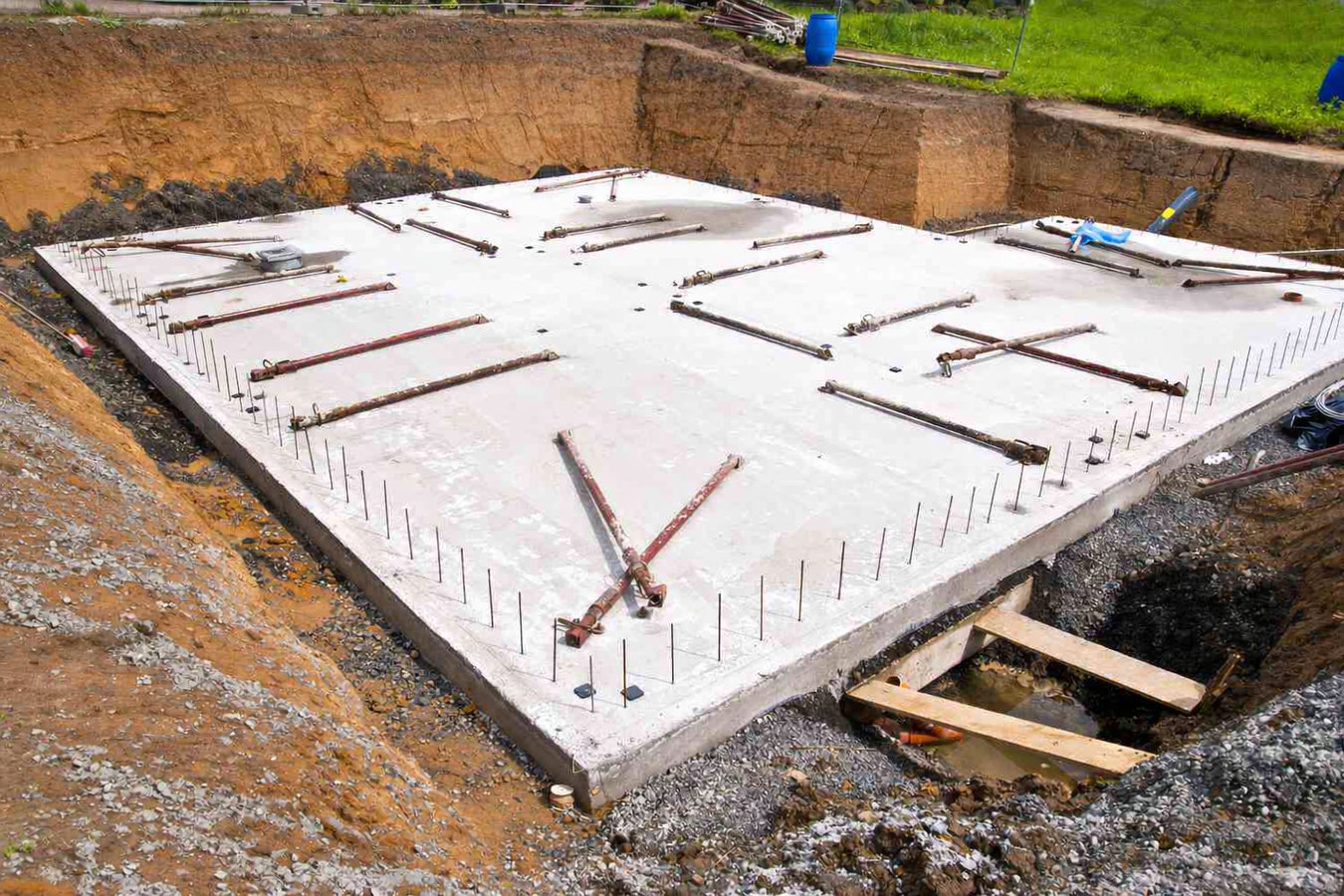
Concrete footings in Canton, MA must be excavated to at least 48 inches below grade to stay below the frost line - the crew digs the trench or holes, sets forms with steel rebar, passes the town inspection, and pours the concrete in a single day, with curing time of three to seven days before construction can begin on top.
Most homeowners who call us are planning a deck, an addition, a detached garage, or a new outbuilding. Others call because a structure that was built in the 1980s or 1990s has started pulling away from the house or feels uneven underfoot - which almost always points back to a footing that was not deep enough or was never reinforced properly. Canton's older housing stock has a lot of this work out there. If the structure on top of the footing has already shifted significantly, our foundation installation service may be the more relevant starting point.
The good news is that properly done footings are a once-and-done solution. When the depth is right, the steel is in place, and the inspection clears, the structure above it stays level through the freeze-thaw cycles that hit this region every winter.
If you notice new cracks in interior walls, exterior foundation areas, or concrete around a deck or addition after the ground thaws in spring, a footing below may have shifted. Canton's freeze-thaw cycles are hard on shallow or aging footings, and a hairline crack can widen significantly over a few seasons. A concrete contractor can tell you quickly whether the crack is cosmetic or structural.
A visible gap opening between a deck or addition and your main house - or a structure that feels springy or uneven underfoot - points to footings that are settling or failing. This is especially common in Canton homes where decks were added in the 1980s and 1990s, sometimes without proper footing depth. A settling deck can become a safety issue, so it is worth addressing sooner rather than later.
When a footing shifts, the structure above it moves too - and that movement shows up as doors that drag, windows that stick, or frames that are visibly out of square. If this is happening in a room that sits above a crawl space or near an addition, the footing is a likely culprit. This symptom is easy to dismiss as a minor annoyance, but it is worth having a contractor look at the underlying cause.
Any new structure attached to your home - or any freestanding structure like a garage or large shed - needs proper footings before construction begins. In Canton, this is a permit requirement, not just a best practice. Starting the footing conversation early means you have time to get the permit in place before the spring building season fills up.
We handle footing work for all residential and small commercial applications - decks, additions, garages, porches, retaining wall bases, and freestanding outbuildings. Every project starts with a site assessment to evaluate soil conditions and plan the excavation. We apply for the building permit, coordinate the required pre-pour inspection with the Canton Building Department, and manage the pour and curing timeline. For homeowners whose projects also involve raising or correcting an existing structure, our foundation raising service often runs alongside new footing work when the existing base has settled unevenly.
All footings include steel rebar reinforcement as a standard part of the pour - not an add-on. The rebar is placed inside the forms before the concrete truck arrives and is visible during the inspector's pre-pour review. This is the step that separates footings that hold for decades from ones that crack when the ground shifts.
For attached and freestanding decks and porches, dug to the 48-inch frost depth Canton's building code requires.
Sized and reinforced for structural loads from new living space or a full detached garage, coordinated with the permit and inspection process.
For structures where existing footings have settled, cracked, or were never deep enough - assessed on site before any work is scoped.
For sheds, outbuildings, and accessory structures that require a stable base but do not attach directly to the main house foundation.
Massachusetts requires footings to be placed at least 48 inches below the finished ground surface - and in Canton, where winters regularly bring hard freezes, this is a code requirement enforced by local inspectors, not a rough guideline. What this means in practice is more excavation than you would need in warmer states, which adds both time and cost to any footing project. The upside is that a footing set below the frost line is not going anywhere. It sits below the zone where the ground freezes and thaws each winter, so the expansion and contraction that damages shallow footings simply cannot reach it.
Canton's soil adds another variable. The town sits in an area shaped by glacial activity, which left behind a mix of sandy soils, clay pockets, and ledge rock at varying depths. A contractor who does not probe the soil before digging may hit unexpected rock - which requires different equipment and adds cost - or soft spots that need to be stabilized before the concrete goes in. We assess the site before quoting so there are no mid-project calls asking for more money over something we should have anticipated. We work throughout Canton and regularly serve neighboring communities like Sharon and Norwood, where similar glacial soil conditions require the same careful site assessment.
A significant portion of Canton's residential neighborhoods were built between the 1950s and 1980s, and footings from that era were often shallower or less reinforced than current standards require. If you are adding onto an older home or building a new structure near an existing foundation, your contractor needs to assess whether the existing footings are adequate - or whether new ones need to be tied in alongside them. This is a conversation worth having before the permit is pulled.
We will ask a few basic questions - what you are building, where on your property, and whether you have had any soil or drainage issues there. Most projects need a site visit before we give you a firm number. Expect the estimate visit to take 30 to 60 minutes.
We apply for the building permit with the Canton Building Department on your behalf - you just need to sign the application. Processing typically takes one to two weeks for straightforward residential projects. We build this into the timeline from day one.
The crew digs to the required 48-inch depth, sets the wood forms, and places the steel reinforcing rods. A Canton building inspector then approves the work before any concrete is poured. Your contractor coordinates the inspection appointment.
The concrete truck arrives and the crew pours, levels, and finishes the footing. After the pour, the concrete needs at least three to seven days before construction can begin on top. Your contractor will confirm the timeline based on weather and project scope.
We handle permits and inspections so you can focus on your project - not the paperwork. Reach out and we will schedule a site visit within one business day.
(781) 633-0867Massachusetts code requires footings at 48 inches below grade in frost-prone areas like Canton. We do not cut this short. Every footing we pour sits below the zone where the ground freezes and thaws, so the structure above it stays level through every New England winter.
We apply for the required building permit and schedule the pre-pour inspection with the Canton Building Department on your behalf. The inspection happens before concrete goes in - which means an independent set of eyes confirms the work is correct while it can still be adjusted.
Canton's glacial soil can include rocky ledge, clay pockets, and loose fill in the same yard. We assess the site before we give you a price, so the number we quote reflects what the job actually involves - not a best-case-scenario estimate.
Every footing we pour includes steel rebar reinforcement placed inside the forms before the concrete truck arrives. The American Concrete Institute considers embedded steel a standard requirement for footings carrying structural loads - we treat it that way, not as an upgrade.
Footing work is invisible once the concrete is poured - which is exactly why the steps before the pour matter so much. When you call Advanced Canton Concrete, you get a contractor who treats the permit, the inspection, and the site assessment as required parts of the job, not optional steps to speed through.
Lifting and correcting settled or uneven foundations when the original footings have allowed a structure to shift.
Learn MoreFull foundation installation for new construction or major additions that go beyond footing work alone.
Learn MoreSpring books up fast - getting your permit in place now means your deck or addition can break ground as soon as the weather allows.