Serving Canton, MA and surrounding areas. (781) 633-0867
A sunken slab near your front door or driveway is a tripping hazard and a drainage problem waiting to get worse. We lift it back to level, fast - without tearing out and replacing the whole slab.
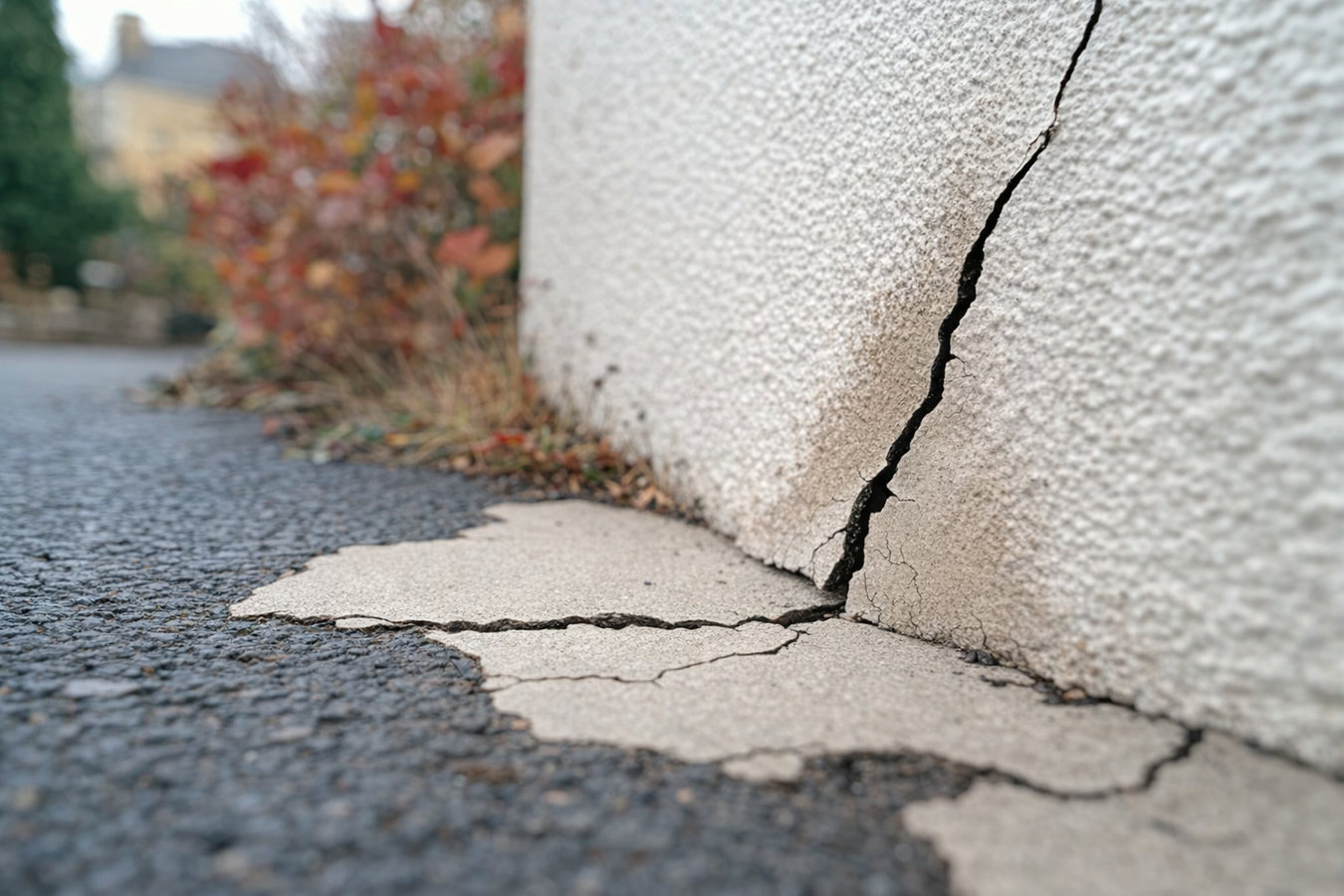
Foundation raising in Canton, MA - also called slab lifting or mudjacking - pumps a material beneath a sunken concrete slab through small drilled holes to fill the void underneath and push the concrete back to its original level, with most residential jobs completed in two to four hours and ready for foot traffic the same day.
If you have a concrete walkway, front stoop, garage slab, or driveway section that has dropped noticeably, you are not alone. Canton winters put concrete slabs through dozens of freeze-thaw cycles every year - the ground expands, contracts, and gradually erodes the soil beneath the slab until a void forms and the concrete starts to drop. What looks like a cosmetic problem can turn into a drainage issue that directs water toward your foundation, or a liability hazard if someone trips on the uneven edge. When the slab itself is still structurally sound, raising is almost always the faster and less expensive fix compared to full replacement. If you are also dealing with cracked or deteriorated concrete that needs cutting and removal, our concrete cutting service addresses that part of the job.
The drill holes left after the work are patched with a concrete mix, and the finished result looks nearly the same as it did before the slab started settling. There is no curing period, no torn-up yard, and no week-long construction zone near your front door.
If a concrete section near your front door, back patio, or garage entrance wobbles or shifts underfoot, the soil beneath it has likely eroded and left a void. This is one of the clearest signs that lifting is needed. Left alone, the rocking will worsen and the slab will continue to drop.
A visible crack or gap between your front stoop and the house foundation - or between two sections of driveway or walkway - means the concrete has moved. In Canton's climate, these gaps tend to open noticeably in spring after the ground thaws. A gap that was not there last fall is a reliable sign that soil movement happened over the winter.
If rainwater or snowmelt collects near your foundation rather than draining away, a sunken slab may be tilting water toward the house instead of away from it. This is a concern in Canton neighborhoods where the soil holds moisture for extended periods. Water sitting against a foundation leads to much bigger problems over time.
If one section of your walkway or driveway sits noticeably higher or lower than the section next to it, that edge is a hazard - especially for older family members or guests. In Canton, this kind of unevenness often appears after a harsh winter when repeated freeze-thaw cycles have shifted one slab section more than another.
We lift sunken concrete slabs for residential properties throughout Canton using two proven methods - traditional slurry injection and expanding polyurethane foam. Both work by filling the void beneath the slab and pushing the concrete back to its original level. Traditional slurry, sometimes called mudjacking, is cost-effective for larger areas with moderate settling. Polyurethane foam cures faster and is lighter, making it a good fit for slabs near drainage-sensitive areas or when a quicker return to use matters. Every job starts with an on-site assessment to determine which method fits your slab and soil conditions - we do not apply a one-size approach. For homeowners whose situation involves soil erosion affecting a deeper foundation, our slab foundation building service may be a more appropriate path.
The assessment also covers drainage. If the slab sank because water is washing soil away from beneath it, we will let you know - because lifting without fixing the drainage means the slab will eventually sink again. We give you a straight picture of what is causing the problem before we start any work, so you can make an informed decision.
Best suited for larger slab areas with moderate settling, using a cement-soil mixture pumped beneath the concrete to fill voids and restore level.
Ideal for slabs near drainage-sensitive areas or when faster curing matters - foam expands to fill the void and sets within 15 minutes.
For slabs sinking due to soil erosion from poor drainage - addresses the root cause so the lift holds long-term.
All drill holes are patched after lifting so the surface blends back in, leaving the slab looking close to its original condition.
Canton sits in a climate zone where temperatures drop below freezing and thaw repeatedly throughout winter and into early spring. Every freeze-thaw cycle causes water in the soil to expand and contract, gradually loosening the material beneath a slab and creating the voids that lead to settling. It is not unusual for a Canton walkway or stoop to drop noticeably within a few winters after it was poured - especially if the original soil compaction was not done to the standards used today. Many homes in Canton were built between the 1950s and 1970s, and slabs from that era were often set on fill material that has had decades to shift and erode. That history is behind a lot of the calls we get. We serve homeowners across Canton and work regularly in nearby communities like Stoughton and Norwood, where the same glacial soil conditions and freeze-thaw patterns drive similar settling problems.
Canton also has several ponds, wetlands, and areas near the Neponset River corridor where soil moisture is higher and erosion beneath slabs moves faster. If your property is near a low-lying area or backs up to conservation land, the void beneath a sunken slab may be larger than it looks from the surface. A contractor familiar with Canton's local geography will catch this during the assessment rather than discovering it mid-job. The Canton Conservation Commission oversees work near wetland buffer zones, and we coordinate that review when it applies to a project.
We will ask which slabs are affected, roughly how much they have dropped, and whether you have noticed any drainage issues nearby. You do not need to know all the answers - just describe what you are seeing and we take it from there.
We visit your property to check how far each section has dropped, look for cracks or structural damage, and evaluate drainage around the area. You get a written estimate explaining the method, scope, and total cost before any work is committed.
Clear the area of vehicles, furniture, or potted plants before the crew arrives. If the work is near a garage, move your car the night before. The lifting itself takes two to four hours for most residential jobs.
The crew drills small holes, injects the lifting material, monitors the slab as it rises, then patches the holes and cleans up. Foot traffic is typically fine within an hour or two. Vehicles should wait 24 hours before driving on a raised driveway slab.
We will come out, assess the slab, and give you a written price with no obligation - so you know exactly what the job involves before you commit to anything.
(781) 633-0867Lifting a slab without understanding why it sank is a temporary fix. We assess drainage, soil conditions, and void size before starting work. If something is pushing water against your foundation, we tell you - and factor that into the solution.
Some slabs are good candidates for raising. Others are too far gone, and replacement is the smarter call. We give you a straight answer either way. Homeowners who have compared quotes tell us that honesty is what made them choose us over a contractor who just wanted to sell the job.
Canton sits on glacial till - a mix of clay, sand, and rock that drains unevenly and shifts with the seasons. Contractors who work here regularly recognize how that soil behaves and plan the lifting material and hole placement accordingly. Local knowledge is not a marketing line - it affects results.
Any contractor doing residential work in Massachusetts must be registered under the{' '}Home Improvement Contractor program. That registration means you have legal protections - including access to the state Guaranty Fund - if something does not go as agreed. Ask to see the registration number before signing anything with any contractor.
Foundation raising is a job where the difference between a result that lasts and one that needs re-lifting in two years comes down to the assessment beforehand and the quality of the injection work itself. We have done this work throughout Canton and the surrounding Norfolk County towns long enough to know what the soil conditions here require - and we back that with a written estimate before we ever pick up a drill. Learn more about Massachusetts HIC contractor protections.
When a sunken or damaged slab needs sections removed before lifting or replacement, precise diamond-blade cutting is the first step.
Learn MoreFor situations where a slab is too deteriorated to raise and needs full replacement with a properly prepared and reinforced new pour.
Learn MoreSpring is the busiest season for concrete work in Canton - call now to get on the calendar before slots fill up.