Serving Canton, MA and surrounding areas. (781) 633-0867
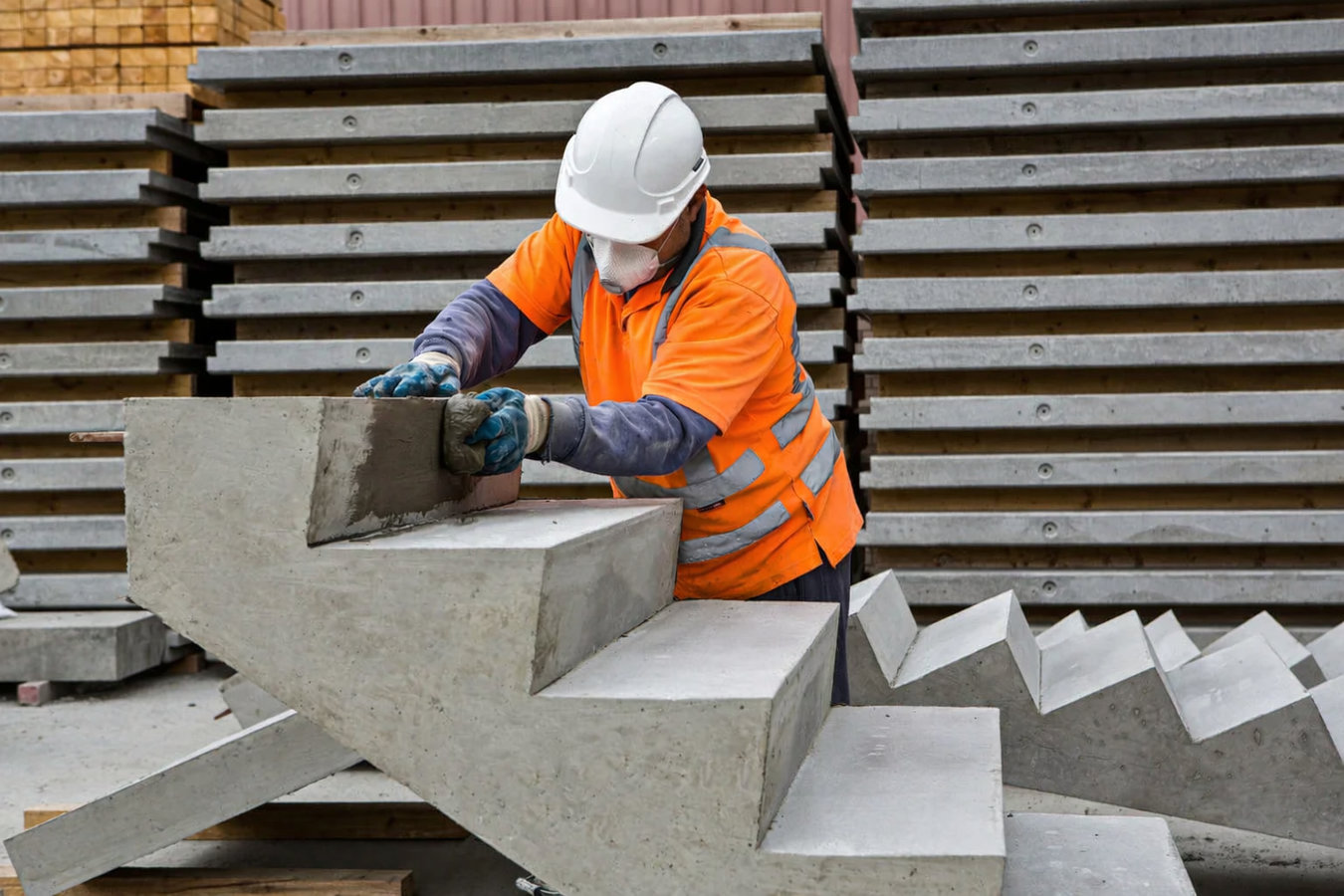
Cracked, tilting, or crumbling front steps are a safety problem that gets worse every winter - and the right fix is steps built for the ground conditions and climate in Canton.
Concrete steps construction in Canton means removing failing steps, preparing a compacted gravel base below the frost line, building wooden forms, and pouring reinforced concrete that holds up through decades of New England winters. Most residential step projects take one to two days of active work, with a curing period of about a week before normal use.
A lot of Canton homes were built between the 1940s and 1980s, and many still have their original steps. Steps from that era are often past the point where patching makes sense. The base has shifted, the concrete is too porous to hold a repair, and the surface is a slip hazard every time it rains or freezes. A fresh set of steps - built on a proper base, with the right concrete mix and a textured finish - solves all three problems at once. If you are considering a complete entry area upgrade, our concrete retaining walls service can address any grade or slope issues alongside the steps.
Call us or fill out the form below. We will come out to look at your existing steps, tell you honestly whether repair or replacement makes sense, and give you a written estimate before any work begins.
If you have noticed a crack in your steps that was hairline a few years ago and is now wide enough to fit a finger into, the freeze-thaw cycle has been doing real damage. Canton winters are hard on concrete, and a crack that keeps growing is not going to stop on its own. At that point, patching is usually a temporary fix - the underlying structure has likely shifted.
If your steps wobble underfoot or you can see a gap opening between the steps and your foundation, the base underneath has shifted. This is especially common in Canton homes built on clay-heavy soil, where ground movement over decades gradually undermines the foundation beneath the steps. Unsteady steps are also a safety hazard - a fall on concrete can cause serious injury.
The front edge of each step takes the most wear. If those edges are crumbling, pitting, or flaking off in chunks, the surface has been compromised - often by years of rock salt and repeated freeze-thaw damage. Once the surface starts breaking down at the edges, water gets in faster, the damage accelerates, and the steps become a slip hazard in wet weather.
Stand back and look at your steps from the side. They should be level or very slightly pitched forward for drainage - not tilting away from the house. Tilting almost always means the base has settled unevenly, which is a structural problem that patching will not fix. This is a common finding in older Canton homes where the original steps were poured without adequate base preparation.
All of our concrete steps projects start the same way: remove the existing structure, excavate, and compact a fresh gravel base. The depth matters in Canton - the ground freezes deep here, and a shallow base shifts every winter, pulling your steps with it. Once the base is right, the concrete mix for the pour is selected for cold-climate performance, meaning it is air-entrained to handle freeze-thaw cycles without breaking down from the inside. For finishes, a broom texture is the standard choice around entries because it gives shoes real grip in wet or icy conditions. If you want something that looks more finished - stamped to mimic stone or brick, or with an added color - we can do that too. If the steps connect to an existing sidewalk or patio, our slab foundation building service ties the flatwork together for a consistent finished surface.
We pull the Canton building permit before any work begins, handle the inspection coordination, and notify Dig Safe before any excavation. When the job is finished, you have documentation that the work was done to code - something that will come up if you ever sell the property. If your steps are also part of a larger entry rebuild, we can assess the whole area and quote it together.
Best for homeowners who want safe, practical steps at a clear price point - reliable traction in all weather.
Suited for homeowners who want the entry to look polished or complement existing stonework or hardscape.
Ideal for entries where a top landing provides more usable space and a safer transition between the door and the steps.
For homes where the original steps are too narrow for comfortable use - a wider pour improves both function and curb appeal.
Canton sits in Norfolk County with a classic New England climate - winter temperatures that drop below freezing regularly and then climb back above it, sometimes multiple times a week. That freeze-thaw cycle is the main enemy of any concrete surface near the ground. For steps, the problem is compounded by the clay-heavy soil common in this area, which holds moisture and shifts more than sandy or loamy soil when it freezes. A contractor who does not dig deep enough and compact a proper gravel base is building steps that will tilt within a few years. Homeowners in Norwood and Stoughton deal with the same soil and climate conditions, and we bring the same frost-depth base approach to every project across the region.
Canton also has a large share of homes built between the 1950s and 1980s, and many still have their original concrete or precast steps. Steps that old are often past the point where patching makes sense - the concrete has become too porous to hold a repair, and the base underneath has usually shifted enough that any patch will crack within a season. If your home is from that era and you have not replaced the steps, a professional assessment is worth doing before the next winter makes the problem worse.
We aim to respond within one business day. The estimate visit typically takes 20 to 30 minutes - we look at the existing steps, check the base condition, and ask about the finish you have in mind. You pay nothing for this visit.
We apply for the Canton building permit before any work begins. This typically takes a few business days to a couple of weeks. You do not need to manage this yourself - we handle the paperwork and track the approval.
On day one, the crew removes the existing steps, excavates the area, and packs in a fresh compacted gravel base. This is the most important part of the job - a proper base is what keeps the finished steps from shifting over time.
Forms are built, concrete is poured and finished with your chosen texture, and a temporary path is set so you can still access your home. After a curing period of about a week, a town inspector signs off and the steps are ready for full use.
No obligation. We will visit your property, look at the existing steps, and give you a written quote that covers everything - including permits and cleanup. Most homeowners hear back within one business day.
(781) 633-0867We excavate and compact gravel to the depth required for Canton winters. Steps that fail within a few years almost always failed because the base was not deep enough. We do not cut this corner, because a shifting base is the one thing that turns a straightforward step project into a callback.
Every step replacement we do is permitted through the Canton Building Department. Permitted work is inspected, documented, and on record - which means no surprises if you ever sell. A Massachusetts Home Improvement Contractor registration is on file and available to any homeowner who asks.
We do not recommend replacement on every job. If your steps can be resurfaced for a few more years at a fraction of the cost, we will tell you that. The American Concrete Institute standards we follow give us clear guidance on when surface repair is a reasonable approach and when the structure needs to come out.
We work throughout Canton - from older homes near Canton Center to newer construction off Washington Street. That local experience means we know what the clay soil in this area does to a poorly prepared base, and we build accordingly on every project.
These are not promises made to win a bid - they are the standard we hold ourselves to because they are what determines whether a step project holds up or becomes a problem in a few years. Call us and see for yourself.
When your steps connect to a larger slab or entry platform, our slab foundation work ties the whole area into one stable, level surface.
Learn MoreFor entries with grade changes, a concrete retaining wall alongside new steps stabilizes the slope and completes the finished look.
Learn MoreCanton concrete season runs from late spring through early fall - reaching out now means you get on the schedule at the best time of year for the pour.